
Why H11 / DIN 1.2343 Tool Steel Remains the Backbone of Hot Work Tooling
When hot work tooling fails, it rarely fails quietly. A cracked die in an extrusion line or a fatigued forging tool doesn’t just stop production – it disrupts schedules, increases tooling costs and affects consistency across entire manufacturing cycles. That’s why, in industries built around heat, pressure and repetition, tool steel selection becomes a strategic decision rather than a material purchase.
Among the many hot work steels available today, H11 tool steel continues to hold a unique position. Known for its balance of toughness, thermal fatigue resistance and dimensional stability, H11 remains one of the most trusted grades for demanding hot work applications.
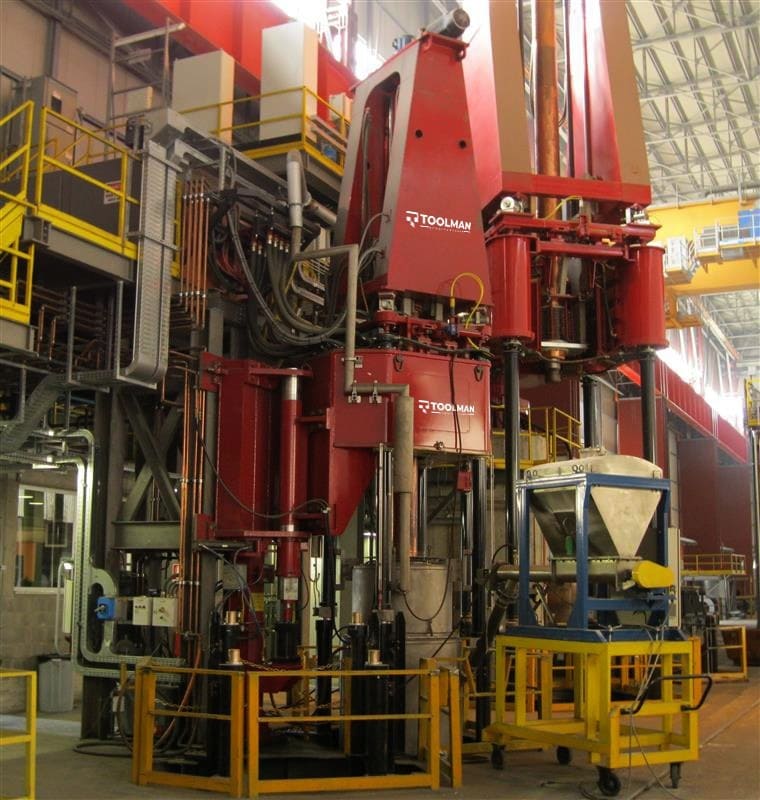
At Toolman Special Steels, we’ve supplied H11 to tooling manufacturers and industrial users across India, Europe, USA, Japan, Turkey and Southeast Asia for decades – supporting industries where thermal reliability is non-negotiable.
What is H11 Tool Steel?
H11 (DIN 1.2343 / X37CrMoV5-1) belongs to the family of 5% chromium hot work tool steels. It is designed specifically for tooling exposed to repeated heating and cooling cycles, where resistance to thermal cracking and shock becomes critical.
Compared to H13, H11 contains slightly lower vanadium and carbon content, which gives it:
- Higher toughness
- Better crack resistance
- Improved resistance to thermal shock
This makes H11 particularly valuable for tooling that experiences severe cyclic stresses or intermittent water cooling.
For readers comparing high speed tool steel grades, our article on High-Speed Steel: Precision and Performance by Toolman offers a broader perspective on how tool steels are selected for demanding industrial environments.
Chemical Composition of H11 Tool Steel
The chemistry of H11 is carefully balanced to combine hardness, toughness and thermal stability.
H11 / DIN 1.2343 Typical Composition (% by weight)
|
Element |
Min (%) |
Max (%) |
|
C |
0.33 |
0.43 |
|
Si |
0.80 |
1.25 |
|
Mn |
0.20 |
0.60 |
|
Cr |
4.75 |
5.50 |
|
Mo |
1.10 |
1.60 |
|
V |
0.30 |
0.60 |
|
Ni + Cu |
– |
≤0.75 |
|
S |
– |
≤0.03 |
|
P |
– |
≤0.03 |
Values shown are typical reference values and may vary slightly depending on processing conditions.
The chromium improves heat resistance and hardenability, molybdenum enhances hot strength, while vanadium contributes to wear resistance and microstructural stability.
Mechanical, Physical & Thermal Properties
H11 is valued because it maintains its integrity under repeated thermal cycling while still offering good toughness.
Mechanical Properties
|
ITEMS |
Value |
|
Annealed Hardness |
Max. 235 HBW |
|
Hardness After Quenching |
Min. 53 HRC |
|
Tensile strength |
1792 MPa |
|
Yield Strength (MPa) |
1,200 - 1,550 |
|
Yield Strength |
1482 MPa |
|
Elongation |
8% |
|
Impact Toughness |
13.6-33.9 J/cm2 |
Physical Properties
|
Property |
Value |
|
Density (g/cm³) |
7.8 g/cm³ |
|
Modulus of Elasticity (GPa) |
215 |
Modulus of Elasticity
|
Condition |
Value |
|
At 500°C |
190-210 GPa |
|
At 600°C |
165 GPa |
Thermal Properties
|
Temperature (℃) |
Thermal Expansion Coefficient (10^-6/℃) |
|
500 |
12.9 |
|
600 |
13 |
Thermal Conductivity
|
Temperature (℃) |
W/m•K |
|
500 |
28.3 |
|
600 |
29.3 |
Why H11 Performs So Well in Hot Work Applications
The real advantage of H11 is not extreme hardness – it’s controlled toughness under heat.
In hot work environments, tooling faces:
- Rapid heating and cooling cycles
- Mechanical shock loads
- Surface fatigue
- Heat checking
H11’s relatively lower carbon content gives it greater crack resistance than H13, especially in larger tooling sections or tools exposed to water cooling.
This is why H11 is widely chosen for:
- Large die blocks
- Forging dies
- Extrusion tooling
- Hot punches
- Die holders
- Tool holders and shrink-fit tooling
Common Applications of H11 Steel
Typical Applications
- Forging dies and hammer tools
- Extrusion dies and mandrels
- Hot shear blades
- Die casting dies
- Hot punches and holders
- Ejector pins and die holders
- Tool holders and shrink-fit chucks
It is particularly effective in tooling environments where thermal shock resistance matters more than extreme wear resistance.
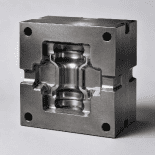
Some of these hot work applications are also discussed in detail in our related technical articles:
Heat Treatment & Processing
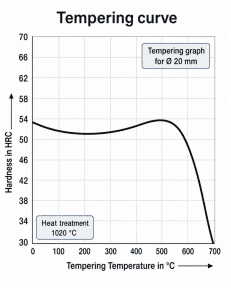
Like most hot work steels, H11 achieves its performance through controlled heat treatment.
Heat Treatment & Processing Parameters
|
Process |
Temperature °C |
Duration |
Cooling Method |
|
Soft annealing |
800 - 860 °C |
2 - 5 h |
Furnace |
|
Stress-relief annealing |
600 - 650 °C |
Min. 4 h |
Furnace |
|
Hardening |
1020 - 1060 °C |
Group II |
Oil, Air, WB 500 °C |
|
Tempering |
530 - 700 °C |
Min. 2 h |
Still Air |
Double tempering is generally recommended for improved dimensional stability and thermal fatigue resistance.
H11 vs H13 vs DIN 1.2367
Choosing the right hot work steel depends on whether the application prioritizes toughness, heat resistance, or thermal fatigue performance.
Hot Work Steel Comparison
|
Grade |
Best Feature |
Typical Use |
|
H11 / DIN 1.2343 |
Toughness & thermal shock resistance |
Forging & extrusion tooling |
|
H13 / DIN 1.2344 |
Wear resistance & thermal fatigue performance |
Die casting & hot work dies |
|
DIN 1.2367 |
Deep hardenability & high-temperature strength |
Heavy-section hot work tools |
Toolman Advantage
Choosing the right steel grade is only part of the equation. Consistency of metallurgy and processing matters just as much.
At Toolman Special Steels, we:
- Supply H11 in bars, flats, plates and custom die blocks
- Offer annealed and heat-treated conditions
- Conduct ultrasonic testing and hardness profiling
- Provide export-ready documentation and logistics support
Our manufacturing ecosystem includes:
- Electric Arc Furnaces (EAF)
- Ladle Refining Furnaces (LRF)
- ESR processing for select grades
- Forging presses and rolling mills
Manufacturing Range
|
Products |
Diameter (mm) |
|
Hot Rolled bar |
8 - 65 |
|
Forged and Turned bars |
65.2 - 500 |
|
Forged Square Bars |
50 - 500 |
Flats
|
THICKNESS |
WIDTH |
|
6.00 mm - 410.00 mm |
20.00 mm - 700.00 mm |
Why Global Buyers Choose Toolman
Over the years, one thing has remained consistent: international tooling manufacturers value predictability.
That’s why Toolman continues to supply H11 to customers across:
- USA
- Europe
- Japan
- Turkey
- Southeast Asia
Our long-standing reputation is built on:
- Metallurgical consistency
- Reliable export supply
- Technical support for tooling applications
- Decades of hot work steel expertise since 1957
Need H11 / DIN 1.2343 for Forging, Extrusion, or Hot Punching?
If your tooling application demands thermal shock resistance, toughness and dimensional stability, H11 is a proven hot work steel solution.
Whether you need forged bars, die blocks, plates, flats, annealed supply, or heat-treated stock, Toolman Special Steels can support your project with the right material condition, documentation and technical guidance.
Closing Note
In hot work tooling, failure usually begins with thermal fatigue, cracking, or instability. H11/ DIN 1.2343 continues to remain relevant because it addresses these challenges at their core – combining toughness, heat resistance and reliability in one balanced grade.
At Toolman Special Steels, we continue to manufacture and supply H11 with the consistency global industries expect from a trusted hot work steel partner.
Write to us: indiatoolman@gmail.com
Explore more: www.toolmansteels.com
Looking for a reliable H11 / DIN 1.2343 hot work tool steel supplier?
Download the H11 / DIN 1.2343 Technical Datasheet
Request a Custom Quote
Talk to Our Metallurgists
Ask About Export-Ready Supply with MTCs
Write to us: indiatoolman@gmail.com
Explore more: www.toolmansteels.com
Related Grades You May Like
- H13 (DIN 1.2344) – Hot Work Benchmark for Die Casting
- DIN 1.2367 – High Toughness Steel for Heavy Hot Work Applications
- DIN 1.2714 – Forging & Die Block Steel with Excellent Toughness
- M2 High-Speed Steel – Precision Cutting Tool Steel
- DIN 1.2379 (D2) – Cold Work Steel for Wear Resistance
Ready to upgrade? Contact our team today for expert guidance and support.
Contact