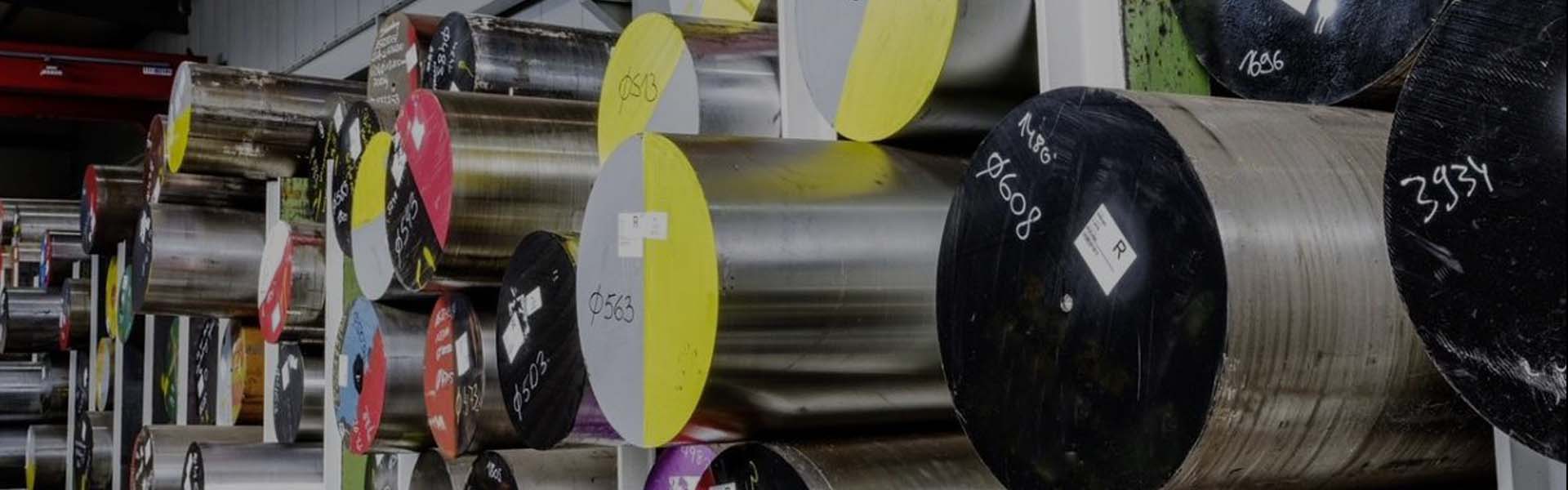
Toolman Special Steels is proud to produce and offer 1.2367 steel, also known as X38CrMoV5-3, is a high-performance hot work tool steel with excellent toughness and resistance to thermal fatigue. It is widely used for hot work applications where high mechanical strength and wear resistance are essential. It has been refined via ESR process to ensure highest quality standards in terms of grain size, segregation, micro-cleanliness, and purity. EN DIN 1.2367 features high isotropy, reason for which transversal resilience is often three times higher when compared to conventional EN DIN 1.2367. Furthermore, the thermal fatigue resistance is also often much higher than that of conventional hot work tool steel EN DIN 1.2343, enabling longer die lifetime.
Steel Properties
-
Small dimensional variation
-
Impact resistance at high temperatures
-
Good machinability
Excellent high temperature strength and wear resistance.
High hardenability and toughness.
Tools can be water cooled.
Chemical Composition (Typical Analysis in %)
| Element | C | Si | Mn | Cr | Mo | V | P | S |
|---|---|---|---|---|---|---|---|---|
| % | 0.35-0.45 | 0.20-0.50 | 0.20-0.40 | 4.80-5.50 | 2.80-3.50 | 0.50-0.80 | ≤0.030 | ≤0.030 |
Mechanical Properties
| Property | Value |
|---|---|
| Hardness (HBW) | 229 max (Annealed) |
| Hardness After Quenching (hardenability) (HRC) | 50 min (Annealed) |
| Yield Strength | 1420 MPa |
| Elongation | ≥12% |
| Impact Toughness | ≥20 J |
Physical Properties
| Property | Value |
|---|---|
| Density | 7.85 |
Modulus of Elasticity
| Temperature (°C) | GPa |
|---|---|
| 500 | 176 |
| 600 | 165 |
Thermal Expansion Coefficient
| Temperature Range (°C) | Thermal Expansion Coefficient (10^-6/°C) |
|---|---|
| 500 | 12.9 |
| 600 | 13 |
Thermal Conductivity
| Temperature Range (°C) | Thermal Conductivity (W/m•K) |
|---|---|
| 500 | 34.2 |
| 600 | 34.9 |
Mechanical Properties
| Property | Value |
|---|---|
| Hardness (Annealed) | Max 240 HB |
| Hardness (Quenched) | 47-53 HRC |
HEAT TREATMENT AND PROCESSES
| Heat Treatment Process | Temperature (°C) | Duration | Cooling |
|---|---|---|---|
| Stress Relieving | 820 - 840 | 4-6 hrs | Furnace |
| Stress relief annealing | 600-650 | min 4 hrs | Furnace |
| Hardening | 1030 - 1060 | Group II | Oil, Air WB 500 - 550°C |
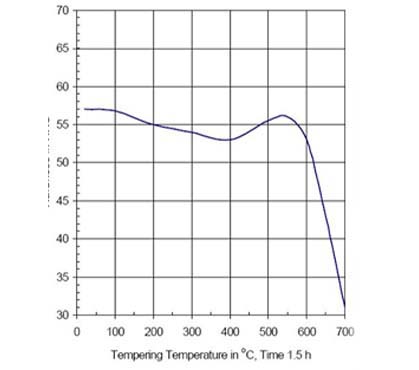
| Tempering | 500 - 700 See tempering curve | min 2 hrs Depending on cross section | Still air |
Applications
-
Wear resisting tools
-
Forging dies
-
Pressure die casting dies,
-
Pressing tools and extrusion dies for light and heavy metals, mandrels
-
Making inserts for light alloys die casting dies as well as for thermosets and thermoplastic injection moulding dies.
Closed dies, punches, stamps and jaws;
Hot rolling rolls, as well as hot cutting applications, such as circular cutting blades, straight cutting blades and angular cutting blades.
Quality Assurance
Our 1.2367 / DIN 1.2367 / AISI 1.2367 steel undergoes rigorous testing and quality control to meet international standards, ensuring consistent performance and reliability. Certificates and test reports are available upon request. Feel free to reach out to us for more information on our 1.2367 steel products or to discuss your specific requirements. We're dedicated to providing top-quality steel solutions that meet your needs and exceed your expectations.
Manufacturing Range
| Products | Diameter (mm) |
|---|---|
| Hot Rolled bar | 8 - 65 |
| Forged and Turned bars | 65.2 - 500 |
| Forged Square Bars | 50 - 500 |
Flats
| THICKNESS | WIDTH |
|---|---|
| 6.00 mm - 410.00 mm | 20.00 mm - 700.00 mm |
Frequently Asked Questions
We manufacture DIN 1.2367 / X38CrMoV5-3 as a high-performance hot work tool steel with excellent toughness, thermal-fatigue resistance, high mechanical strength and wear resistance. We refine the grade through the ESR process to improve grain size, segregation control, micro-cleanliness and purity.
Our DIN 1.2367 steel offers small dimensional variation, impact resistance at high temperatures, good machinability, excellent high-temperature strength, strong wear resistance, high hardenability and good toughness. The grade can also be used in tools that are water cooled.
We supply DIN 1.2367 for wear-resistant tools, forging dies, pressure die-casting dies, pressing tools, extrusion dies for light and heavy metals, mandrels, die-casting inserts, thermoset and thermoplastic injection-moulding dies, closed dies, punches, stamps and jaws. It is also suitable for hot-rolling rolls and hot-cutting blades.
Our published data specifies a maximum annealed hardness of 229 HBW and a minimum hardness after quenching of 50 HRC. We also publish a yield strength of 1,420 MPa, elongation of at least 12% and impact toughness of at least 20 J.
Our heat-treatment guidance specifies an initial stress-relieving stage at 820–840°C, stress-relief annealing at 600–650°C, hardening at 1030–1060°C, and tempering within 500–700°C depending on the required final properties and cross-section.
Our DIN 1.2367 typical analysis contains 0.35–0.45% carbon, 0.20–0.50% silicon, 0.20–0.40% manganese, 4.80–5.50% chromium, 2.80–3.50% molybdenum and 0.50–0.80% vanadium, with phosphorus and sulphur limited to 0.030% each.
We manufacture hot-rolled bars from 8–65 mm diameter, forged and turned bars from 65.2–500 mm, and forged square bars from 50–500 mm. Flats are available from 6–410 mm thickness and 20–700 mm width. We also provide certificates and test reports on request following our testing and quality-control processes.
