
High-Speed Steel (HSS): Grades, Applications & Why It Still Matters in Modern Machining
Modern manufacturing moves fast. Faster spindle speeds, tighter tolerances, automated CNC environments and longer production runs have transformed machining into a discipline where tooling performance directly impacts productivity. Yet behind every clean cut, precision bore, or high-speed milling operation lies a material that quietly powers the entire process: high-speed steel (HSS).
Despite the rise of carbide and advanced coatings, high-speed steel continues to remain one of the most versatile and widely used tooling materials in the world. Its ability to combine hardness, toughness, wear resistance and thermal stability has made it indispensable across industries ranging from automotive and aerospace to woodworking and precision engineering.
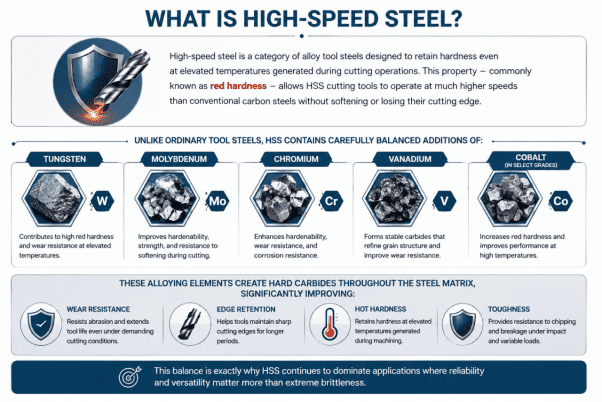
At Toolman Special Steels, high-speed steel has been part of our story since the beginning. What started as a trading division for HSS cutting tools in 1957 has evolved into a global manufacturing operation supplying premium HSS grades to customers across India, USA, Europe, Japan, Turkey and Southeast Asia.
The Evolution of High-Speed Steel
The development of HSS fundamentally changed machining history.
Before high-speed steel, cutting tools lost hardness rapidly at elevated temperatures, limiting cutting speeds and productivity. Early breakthroughs in alloyed tool steels around the beginning of the 20th century allowed machining speeds to increase dramatically, reshaping industrial manufacturing worldwide.
Today, high-speed steels are broadly classified into:
Types of High-Speed Steel
|
HSS Category |
Characteristics |
Common Grades |
|
Molybdenum-based HSS |
Balanced toughness, wear resistance, cost efficiency |
M2, M3, M7 |
|
Cobalt HSS |
Improved red hardness and heat resistance |
M35, M42 |
|
Tungsten-based HSS |
Excellent hot hardness and edge retention |
T1, T4, T15, T42 |
Values and classifications are based on Toolman’s HSS product range.
Toolman’s High-Speed Steel Portfolio
Toolman manufactures and supplies a wide range of HSS grades for global tooling applications.
Toolman High-Speed Steel Grades
|
Grade Family |
Grades Available |
|
M-Series HSS |
|
|
Tungsten HSS |
|
|
Specialty Grades |
These grades are supplied for applications involving:
- Cutting tools
- Metalworking tools
- Woodworking tools
- Gear cutting
- Broaching
- Precision machining
HSS Grade Selector
Choosing the right HSS grade depends on the application, cutting conditions, material being machined, and performance priority.
|
Requirement |
Recommended Grade |
|
General-purpose cutting tools |
M2 |
|
Better wear resistance than M2 |
M3 |
|
Toughness for shock-prone tools |
M7 |
|
Better red hardness and wear resistance |
M35 |
|
High-performance machining of hard materials |
M42 |
|
Tungsten-based edge retention |
T1 |
|
Extreme hot hardness and wear resistance |
T15 |
|
Advanced high-performance machining |
T42 |
|
High-load or custom tooling applications |
ABC III |
Why High-Speed Steel Still Matters
There’s a common misconception that carbide has replaced HSS entirely. In reality, modern manufacturing still relies heavily on HSS because it offers something carbide struggles with: balanced toughness.
Carbide delivers exceptional hardness, but it can also be brittle. HSS, on the other hand, offers:
- Better shock resistance
- Easier regrinding and reshaping
- Lower tooling cost
- Greater versatility across varied cutting environments
That’s why HSS remains widely used for:
- Drill bits
- End mills
- Reamers
- Taps and dies
- Gear cutters
- Broaches
- Saw blades
In many real-world machining environments – especially where interrupted cuts or variable loading exist – HSS still delivers outstanding value.
Common Applications of High-Speed Steel
Typical HSS Applications
- Twist drills and step drills
- Milling cutters and end mills
- Taps and threading tools
- Broaches and reamers
- Gear hobs and gear cutters
- Industrial saw blades
- Woodworking cutting tools
- Cold work punches and dies
High-speed steel also continues to find applications in:
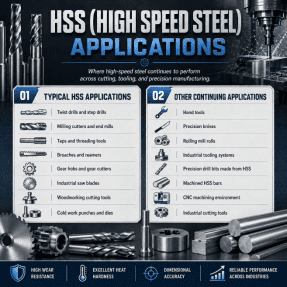
- Hand tools
- Precision knives
- Rolling mill rolls
- Industrial tooling systems
- Precision drill bits made from HSS
- Machined HSS bars
- CNC machining environment
- Industrial cutting tools
Some of these tooling applications are also explored in our related technical articles:
Manufacturing High-Speed Steel: Why Process Matters
Producing high-speed steel is not just about alloy chemistry – it’s equally about metallurgical control.
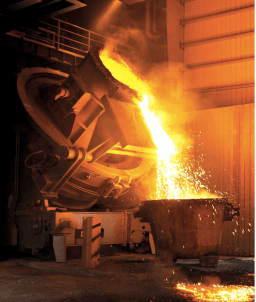
At Toolman Special Steels, HSS manufacturing involves:
- Electric Arc Furnaces (EAF)
- Ladle Refining Furnaces (LRF)
- Controlled remelting processes
- Forging and rolling
- Precision heat treatment
- Ultrasonic testing and metallurgical inspection
These steps ensure:
- Uniform carbide distribution
- Structural cleanliness
- Consistent hardness
- Reliable machinability
Our infrastructure supports the production of high-speed steels for demanding industrial environments worldwide.
High-Speed Steel vs Carbide
Choosing between HSS and carbide depends on application priorities.
|
Property |
High-Speed Steel |
Carbide |
|
Toughness |
Higher |
Lower |
|
Brittleness |
Lower |
Higher |
|
Regrindability |
Easier |
More difficult |
|
Cost |
Lower |
Higher |
|
High-Speed Cutting |
Good |
Excellent |
|
Shock Resistance |
Better |
Limited |
For many manufacturers, the ideal tooling strategy often combines both materials depending on cutting conditions and cost priorities.
Why Global Buyers Choose Toolman as a High-Speed Steel Manufacturer
Over the years, Toolman has built long-term relationships with tooling manufacturers and OEMs who value consistency as much as chemistry.
Global buyers choose Toolman because we provide:
- A broad portfolio of HSS grades
- Export-ready supply formats
- Consistent metallurgy
- Technical guidance for tooling applications
- Reliable logistics and documentation
Our experience in high-speed steels spans more than six decades – and that metallurgical legacy continues to shape our manufacturing approach today.
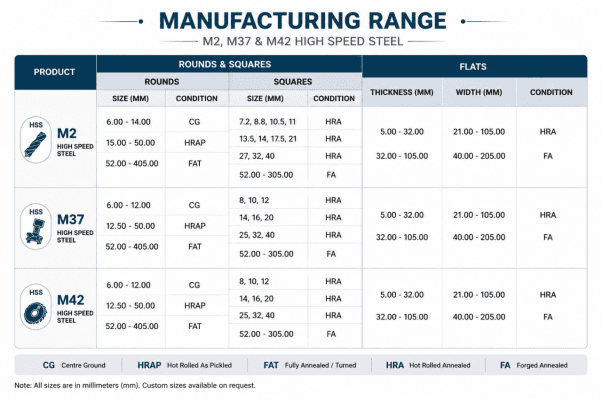
Available HSS Supply Formats
|
Product Type |
Available Formats |
|
Round Bars |
Hot rolled, forged, turned |
|
Flat Bars |
Precision machined and annealed |
|
Square Bars |
Multiple tooling dimensions |
|
Plates & Blocks |
Tooling and die applications |
|
Custom Sizes |
On request |
Closing Note
Machining technology may continue to evolve, but the fundamentals remain the same: cutting tools still require strength, heat resistance, wear resistance and reliability. High-speed steel continues to deliver that balance better than almost any other tooling material.
At Toolman Special Steels, we remain committed to manufacturing HSS grades that meet the demands of modern machining – from conventional workshops to advanced CNC production environments worldwide.
Looking for a Reliable High-Speed Steel Manufacturer in India?
If your application requires HSS for drills, taps, end mills, saw blades, broaches, industrial knives, or precision cutting tools, Toolman Special Steels can help you source the right grade in the right supply condition.
We support customers with:
- M2, M3, M7, M35, M42, T1, T4, T15, T42, and ABC III grades
- Custom sizes and machining stock
- Heat-treated or annealed supply
- Export-ready documentation
- Technical guidance for grade selection
- Reliable global logistics
Write to us: indiatoolman@gmail.com
Explore more: Toolman Special Steels
→ Check out the Complete HSS Product Range
(Includes grades, applications, heat treatment information & manufacturing range.)
Related Grades You May Like
- M2 High-Speed Steel – The Industry Standard for Cutting Tools
- M35 High-Speed Steel – Cobalt-Alloyed HSS for Improved Wear Resistance
- M42 High-Speed Steel – Extreme Red Hardness for High-Speed Machining
- T1 High-Speed Steel – Tungsten-Based HSS with Excellent Edge Retention
- H13 Tool Steel – Hot Work Tool Steel for Die Casting & Extrusion
Ready to upgrade? Contact our team today for expert guidance and support.
Contact