
M2 High-Speed Steel: The Workhorse of Toolrooms Everywhere
If you’ve ever drilled through hardened steel, cut precision threads, or milled components at speed, there’s a good chance M2 high-speed steel (HSS) was doing the heavy lifting behind the scenes. It’s not flashy, it doesn’t chase trends – but it delivers, consistently. That’s exactly why M2 has earned its reputation as the workhorse of toolrooms worldwide.
At Toolman Special Steels, we’ve been supplying M2 for decades, supporting toolmakers and OEMs across automotive, aerospace, general engineering and woodworking industries. Today, we’re recognised among the trusted M2 high-speed steel suppliers in India, serving both domestic and global markets.
What Makes M2 High-Speed Steel Stand Out?
M2 belongs to the molybdenum-based family of high-speed steels, a category known for its balance between cutting performance and toughness. Its alloying strategy – combining tungsten, molybdenum, chromium and vanadium – creates a microstructure capable of withstanding high cutting speeds without rapid wear or edge failure.
In practical terms, M2 delivers:
- Strong cutting edges
- Reliable performance at elevated temperatures
- Predictable machinability
- Cost-effective versatility
This balance is what makes M2 the default choice for a wide range of cutting tools.
Chemical Composition of M2 High-Speed Steel
Chemical Composition
|
Element |
Value |
|
C |
0.9 |
|
Cr |
4.1 |
|
Mo |
5.00 |
|
W |
6.00 |
|
Co |
- |
|
V |
1.8 |
Typical composition (reference):
- Carbon (C): 0.85 – 0.90
- Tungsten (W): 5.50 – 6.75
- Molybdenum (Mo): 4.50 – 5.50
- Chromium (Cr): 3.75 – 4.50
- Vanadium (V): 1.75 – 2.20
This alloy balance promotes carbide formation, which directly improves wear resistance, red hardness and edge stability.
M2 High-Speed Steel Technical Specifications
Key Mechanical & Thermal Properties
Thanks to its alloy design and heat treatment response, M2 achieves an excellent performance envelope.
- Hardness: ~62–65 HRC after heat treatment
- Red hardness: Maintains cutting ability up to ~600 °C
- Wear resistance: High, suitable for long production runs
- Toughness: Good resistance to chipping in high-speed operations
|
Category |
Property |
Condition / Temperature |
Value |
|
Mechanical Properties |
Hardness (HBW) |
Annealed |
≤ 250 HB |
|
|
Hardness (HRC) |
Quenched & tempered |
≥ 64 HRC |
|
Physical Properties |
Density |
— |
8.1 g/cm³ |
|
Elastic Properties |
Modulus of Elasticity |
20 °C |
225 kN/mm² |
|
Thermal Properties |
Thermal Expansion Coefficient |
400 °C |
12.1 × 10?? /°C |
|
|
600 °C |
12.6 × 10?? /°C |
|
|
Thermal Conductivity |
Thermal Conductivity |
20 °C |
24 W/m·K |
|
|
400 °C |
28 W/m·K |
|
|
|
600 °C |
27 W/m·K |
Where M2 is Used
M2’s versatility makes it one of the most widely used HSS grades globally. It performs reliably across both metal-cutting and woodworking environments.
Typical Applications
- Drill bits and end mills for high-speed drilling and milling
- Taps and reamers for threading and finishing operations
- Saw blades for cutting ferrous and non-ferrous materials
- Gear cutters and broaches for precision automotive and aerospace components
- Woodworking tools such as planer knives, chisels and saws
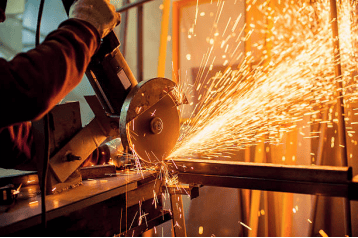
In short, when manufacturers need a general-purpose HSS that balances performance and cost, M2 is often the first choice.
Heat Treatment & Processing
M2 responds well to controlled heat treatment, allowing toolmakers to tailor performance based on application.
|
Heat Treatment Process |
Temperature Range |
Procedure |
Purpose |
Resulting Hardness (HRC) |
|
Annealing |
850-880°C |
Heat slowly to 850-880°C, hold until uniform, cool in the furnace to room temperature |
To soften the steel and relieve internal stresses |
- |
|
Stress Relieving |
600-700°C |
Heat to 600-700°C, hold until uniform, cool in still air |
To remove machining stresses |
- |
|
Hardening |
1200-1250°C |
Preheat to 450-500°C, then heat rapidly to 1200-1250°C, hold until uniform, quench in oil or air |
To increase hardness and wear resistance |
- |
|
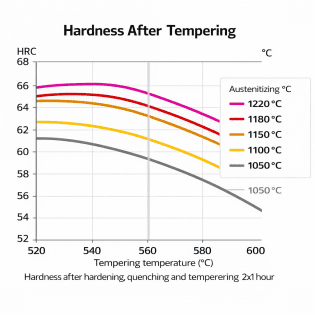
Tempering |
540-600°C |
Heat to 540-600°C, hold for at least 2 hours, cool in still air |
To balance hardness, strength and toughness |
58-65 HRC |
India’s Edge in M2 High-Speed Steel Supply
As global manufacturing accelerates, demand for reliable cutting tool materials has surged. Over the past decade, India has emerged as a preferred sourcing hub for high-speed steels, combining metallurgical capability with export efficiency.
OEMs and toolmakers in Europe, Japan and the USA increasingly source M2 from Indian manufacturers, not just for cost advantages, but for consistent quality and international compliance.
As established M2 high-speed steel suppliers in India, Toolman Special Steels supports this demand with export-ready materials and application-focused support.
The Toolman Advantage
At Toolman Special Steels, M2 production is backed by robust infrastructure and strict quality control.
Our Capabilities Include:
- Electric Arc Furnaces (EAF) and Ladle Refining Furnaces (LRF)
- Vacuum Degassing for improved cleanliness
- Forging presses and rolling mills
- CNC machining support for tool-ready stock
Each M2 batch undergoes:
- Ultrasonic testing
- Hardness profiling
- Metallurgical inspection
We supply M2 in:
- Round bars
- Flat bars
- Plates
- Custom die blocks
Available in annealed or pre-hardened condition, based on customer needs.
Looking Ahead
As industries move toward automation, higher cutting speeds and tighter tolerances, M2 remains as relevant as ever. Its adaptability, reliability and proven performance ensure it will continue powering toolrooms across the world.
With more than 65 years of metallurgical expertise, Toolman Special Steels remains committed to supplying M2 steel that meets today’s demands—and tomorrow’s challenges.
Contact: indiatoolman@gmail.com
Learn more: www.toolmansteels.com
Download the M2 High-Speed Steel Technical Datasheet →
Related Grades You May Consider
Depending on your cutting conditions, tool life requirements and operating temperatures, the following grades may also be suitable alternatives or complements to M2 high-speed steel:
- M42 High-Speed Steel – Cobalt-rich HSS for extreme hardness and red-hardness at high cutting speeds
- M35 High-Speed Steel – Balanced cobalt-alloyed HSS offering improved wear resistance over M2
- T1 High-Speed Steel – Tungsten-based classic HSS known for hot hardness and edge retention
- H13 Tool Steel – Hot work steel preferred for die casting, forging and high-temperature tooling
Ready to upgrade? Contact our team today for expert guidance and support.
Contact